
Corsages and buttonholes are the smallest items on any floral order and the most likely to be got wrong. They are worn on a body for eight to twelve hours, in Sydney weather, pinned to fabric that costs more than the flowers, and they appear in every single photograph.
This guide covers the styles, who traditionally wears which, realistic Sydney pricing, the flower choices that survive a summer afternoon, and how to fit and care for them properly.
What They Actually Are
Buttonhole (boutonniere)
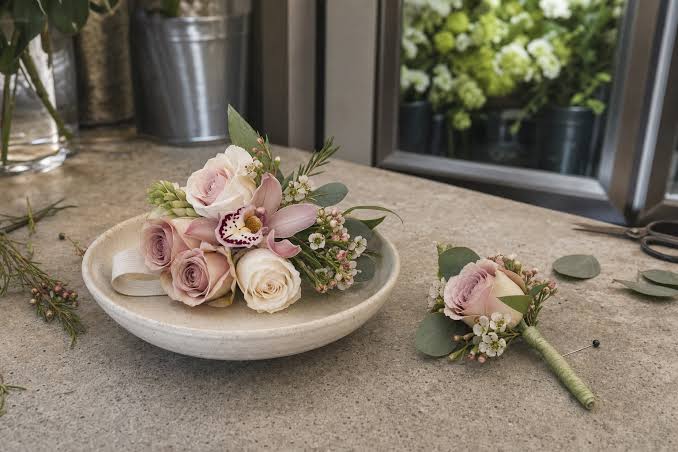
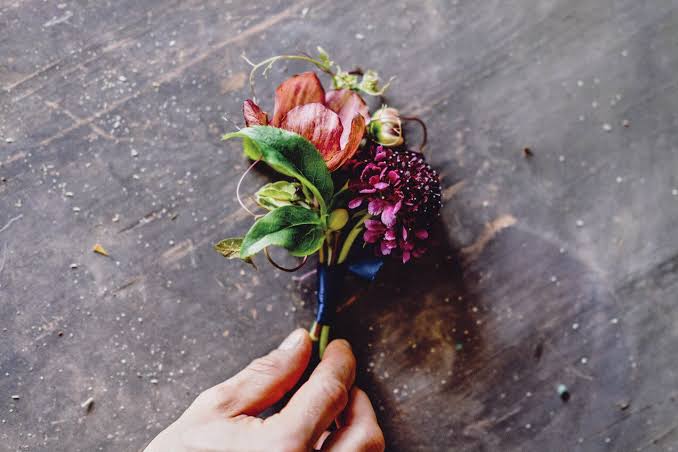
A single small floral arrangement worn on the left lapel, over the heart. Traditionally one focal bloom plus a small amount of foliage and detail. Bound with floral tape and finished with ribbon or twine.
Pin-on corsage
A slightly larger arrangement pinned to a dress, jacket or shoulder. The traditional format for mothers and grandmothers at weddings and formals.
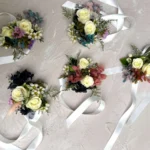
Wrist corsage
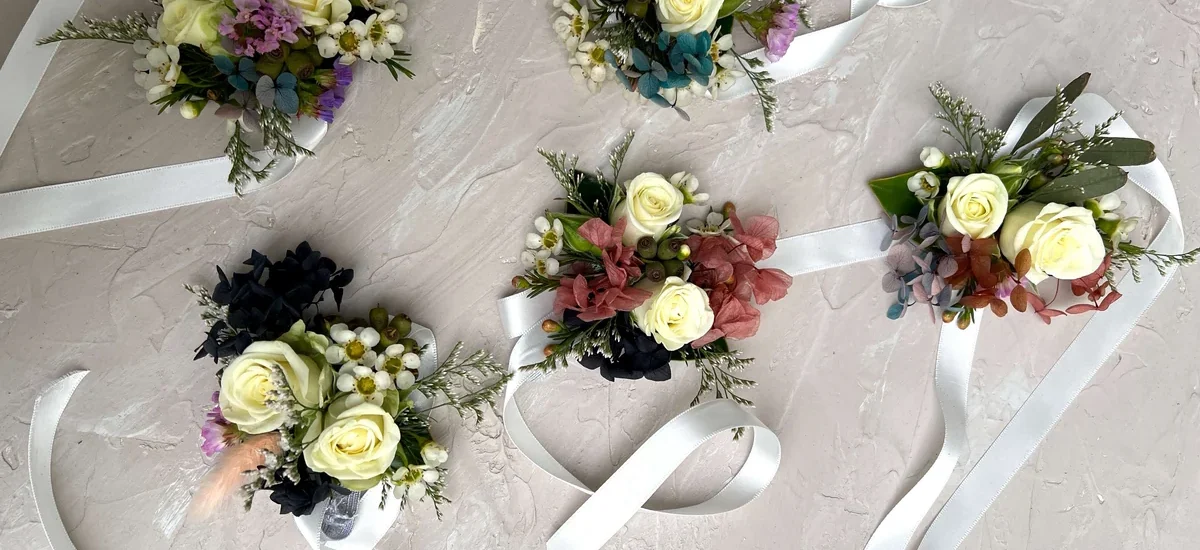
Mounted on an elastic, ribbon or beaded band. Overwhelmingly the modern preference, particularly for school formals – no pins, no fabric damage, and it photographs well in hand shots.
Hand-held posy
A tiny bouquet, sometimes used instead of a corsage for flower girls or young attendants.
Handbag or clutch corsage
Attached to a bag strap or clutch. Increasingly popular for anyone in delicate fabric who does not want a pin anywhere near it.
Who Wears What at a Sydney Wedding
Convention, not law – plenty of couples ignore all of this happily.
- Groom: buttonhole, slightly larger or distinct from the rest, often echoing the bridal bouquet.
- Groomsmen and best man: matching buttonholes, simpler than the groom’s.
- Fathers and grandfathers: buttonholes.
Mothers and grandmothers: corsages, wrist or pin-on. Ask which they prefer – many older women dislike pins.
- Ushers, readers and celebrant: buttonholes if budget allows. A nice touch.
- Page boys: small buttonholes.
- Flower girls: posy, basket or wrist corsage rather than a pinned piece.
Count your corsages and buttonholes twice. Under-ordering by one is the single most common wedding floral error, and there is no way to fix it on the morning.
Watch: How a Buttonhole Is Made
This is a clear, calm walkthrough of the construction, using dried flowers – which is a genuinely smart choice for a summer wedding: How to Create Your Own Buttonhole or Corsage Using Dried Flowers. Note the wiring, the parafilm, and the care taken to ensure no wire ends can pierce fabric.
Sydney Pricing
- Simple buttonhole: $22 – $35
- Detailed buttonhole: $35 – $55
- Pin-on corsage: $35 – $60
- Wrist corsage, elastic or ribbon band: $40 – $70
- Wrist corsage, beaded or crystal band: $60 – $95
- Handbag corsage: $40 – $70
- Dried or preserved buttonhole: $28 – $50
- Flower girl wrist posy: $35 – $60
Why such a range for such a small item? Labour. Corsages and buttonholes are almost entirely handwork – individual blooms are wired, taped, assembled, bound and finished. A detailed wrist corsage can take twentyfive minutes. That is more design time per dollar than a table centrepiece.
The Best Flowers for Corsages and Buttonholes
The brief is unforgiving: small, structurally strong, and able to survive hours out of water in Australian heat.
Excellent choices
- Spray rose – the workhorse. Small, tough, elegant.
- Lisianthus – soft, rose-like, remarkably resilient.
- Waxflower – textural, long-lasting, cheap.
- Hypericum berry – structural, holds indefinitely.
- Craspedia (billy buttons) – yellow spheres, essentially indestructible.
- Succulent rosettes – increasingly popular, last forever, become a plant afterwards.
Orchid (dendrobium, cymbidium florets) – superb heat tolerance.
- Thistle and eryngium – modern, blue-toned, structural.
- Eucalyptus, olive and pistachio foliage – the standard backing greens.
- Dried elements – bunny tails, preserved hydrangea, bleached ruscus, dried palm.
Avoid
Gardenia (bruises if you look at it), hydrangea (wilts within two hours out of water), sweet pea, ranunculus in heat, anemone, and anything with a soft hollow stem.
On natives: waratah, flannel flower, kangaroo paw and boronia all make beautiful buttonholes and are exceptionally heat-tolerant. Worth knowing that some Australian native species are protected, and commercial supply is regulated – the NSW rules on licensing for protected native cut flowers govern which species can be harvested and grown for the floristry trade. A reputable florist buys tagged, licensed stock.
Fitting Them Properly
This part is almost always done wrong, and it takes ninety seconds to do right.
Buttonhole
- Left lapel, over the heart.
- Stem pointing down, flower head up. This trips people constantly.
- Use the loop on the back of the lapel if the jacket has one.
- Pin from behind the lapel, through the tape-bound stem, back out behind the lapel. The pin should not be visible from the front.
- Two pins for anything larger than a single bloom. One pin allows rotation.
Pin-on corsage
- Left shoulder or upper chest, flowers angled up and slightly outward.
- Pin through the fabric from underneath where possible.
- On delicate fabric, use a magnetic corsage clip instead of pins. Ask your florist for these.
Wrist corsage
- Non-dominant wrist. She will be holding a glass in the other one.
- Flowers on the outside of the wrist, facing outward.
- Snug, not tight. Fingers should slide under the band easily.
Keeping Them Fresh Through a Sydney Day
Corsages and buttonholes have no water source. Everything depends on cold storage before wear.
- Collect the day before and refrigerate immediately, in the box, in the crisper drawer, away from fruit.
Ethylene from ripening fruit will destroy them overnight.
Never freeze. Petals blacken.
- Light misting with water the morning of, then straight back into the fridge.
- Keep in the box until the last possible moment.
- In the car, use air conditioning. A box on a back seat in February is a write-off.
- Expect eight to twelve hours of good appearance from fresh stems, and considerably more from orchid, craspedia, waxflower and succulents.
If the event runs long, dried and preserved corsages and buttonholes are the honest answer. They look identical in photographs and survive indefinitely.
Beyond Weddings
School formals and year 12 events. Sydney’s formal season runs September to November. Wrist corsages dominate, matched to dress colour, and the boys’ buttonholes should complement rather than match exactly.
Debutante balls. Traditional pin-on corsages, usually white.
Milestone birthdays and anniversaries. A single buttonhole for the guest of honour is a lovely, cheap touch.
Funerals and memorials. A simple buttonhole for pallbearers and immediate family. Understated, and genuinely meaningful.
Corporate events and awards nights. Buttonholes for speakers and honourees.
The craft itself is taught seriously – wearable floral design sits within broader design and creative practice programs as well as trade floristry qualifications, and the difference between a well-wired corsage and a hot-glued one is immediately visible.
Ordering Checklist
- Count everyone, then add one spare.
- Confirm wrist versus pin-on with each woman individually.
- Ask for magnetic clips on delicate fabric.
- Choose heat-tolerant blooms for any event between November and March.
- Order three weeks ahead for weddings, one week for formals.
- Collect the day before and refrigerate.
- Ask for two pins per pinned item.
- Consider dried elements for outdoor summer events.
The Bottom Line
Corsages and buttonholes are small, labour-intensive and disproportionately visible. Choose tough blooms, count carefully, refrigerate properly, and fit them the right way up. Get those four things right and your corsages and buttonholes will still look sharp in the photographs taken at midnight.